
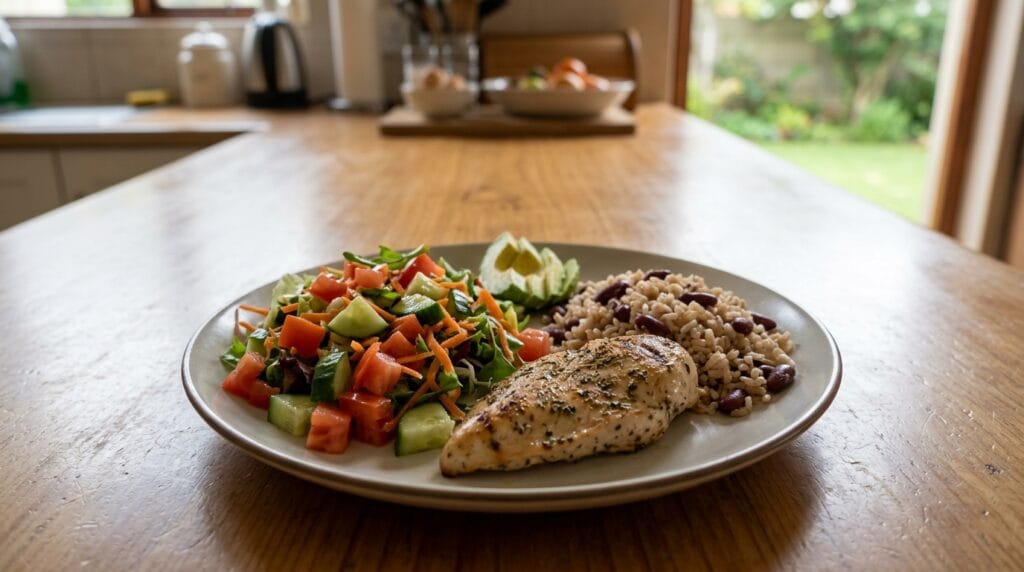
Balanced meals for busy people do not need complicated recipes, expensive ingredients or perfectly planned days. A more realistic approach is learning how to combine familiar foods into easy healthy meals that provide variety, fit your budget and work with the way you actually live.
Table of Contents
What Does a Balanced Meal Actually Look Like?
There is no single meal that everyone needs to copy.
The World Health Organization describes a healthy diet in terms of adequacy, balance, moderation and diversity. It also recognises that the exact foods that make up a healthy eating pattern can vary according to culture, lifestyle, activity levels and locally available foods.
South Africa’s food-based dietary guidance takes a similarly flexible approach. It encourages variety across foods such as starchy foods, vegetables and fruit, beans and lentils, dairy foods such as milk, maas or yoghurt, and protein foods such as eggs, fish, chicken and lean meat.
This is useful when thinking about healthy eating in South Africa, because our everyday meals can look very different from one household to another.
Pap and beans can form part of a balanced eating pattern. So can rice and chicken, eggs on toast, lentil curry, samp and beans, fish with potatoes, or oats with yoghurt and fruit.
For balanced meals for busy people, a practical starting point is to look for a combination of:
- vegetables or fruit
- a familiar starchy food
- a source of protein
- other foods that add variety, flavour and nourishment, such as dairy, nuts, seeds, avocado or vegetable oil
This is not a rigid plate prescription. You do not have to achieve perfect balance in every individual meal either. Your everyday nutrition is shaped by what you eat across days and weeks, not by whether every plate looks exactly the same.
If you would like personal support with practical food choices and routines, you can also learn more about daily nutrition support.
A Simple Formula for Balanced Meals for Busy People
When you are tired, rushing between responsibilities or arriving home late, deciding what to eat can feel like another job.
That is why simple meal planning can be more useful than searching for a completely new recipe every evening.
Instead of thinking about a perfect menu, build your meal from a few flexible components.
1. Start with a familiar starchy food
Starchy foods can provide an important source of carbohydrate and can fit comfortably into a varied eating pattern.
Options commonly found in South African homes include:
- oats
- rice
- maize meal or pap
- samp
- potatoes or sweet potatoes
- bread or wraps
- pasta
Higher-fibre or less refined choices can be useful where they are affordable, available and enjoyable, but there is no need to treat foods such as white rice, bread or pap as forbidden.
Balanced eating is about the overall pattern rather than labelling individual foods as good or bad.
2. Add a protein food
Protein can come from both animal and plant foods.
Practical choices include:
- eggs
- chicken
- fish
- lean meat
- beans
- lentils
- split peas
- soya foods
- yoghurt
- milk or maas
- peanut butter
- nuts or seeds
South African dietary guidance specifically encourages regular inclusion of dry beans, split peas, lentils and soya.
These foods can also be useful when looking for affordable balanced meal ideas, particularly if meat is becoming more expensive.
Protein is important, but more is not automatically better. Individual needs differ according to factors such as body size, age, activity, health and life stage.
3. Include vegetables or fruit
Vegetables and fruit provide fibre as well as a variety of vitamins, minerals and other nutrients.
Fresh produce is useful, but it is not the only option.
Frozen vegetables can make easy healthy meals much more practical when you do not have time to wash and chop several ingredients. Canned vegetables, beans and fruit may also be useful, depending on the product. Where relevant, compare labels for added salt or sugar.
You could add:
- frozen mixed vegetables to rice or pasta
- spinach or tomato to eggs
- grated carrot or cabbage to sandwiches
- beans and vegetables to a curry
- fruit to oats or yoghurt
- vegetables to mince, lentils or soup
The goal is not to squeeze every type of vegetable into one meal. Regular variety across the week is a more realistic approach.
Balanced Meal Ideas Using Familiar South African Foods
One of the easiest ways to improve healthy eating habits is to make better use of meals you already know how to prepare.
You do not need a separate “diet meal” while everyone else in the household eats normally.
Here are some flexible balanced meal ideas for busy days.
Quick breakfast ideas
Oats, yoghurt and fruit
Prepare oats with milk or water, then add yoghurt and fruit such as banana, apple or berries when available.
Nuts, seeds or peanut butter can add extra variety if they suit your preferences and budget.
Eggs, toast and tomato
Scrambled, boiled or poached eggs can be paired with toast and tomato, spinach, mushrooms or fruit.
This is one of several easy healthy meals that can work for breakfast, lunch or a quick supper.
Peanut butter toast and fruit
Toast with peanut butter and a piece of fruit can be useful on mornings when you need something simple.
Breakfast also does not have to consist of traditional breakfast foods. Leftover supper can be breakfast if that is convenient for you.
Easy Healthy Lunch Ideas for Work or Home
Lunch is often where busy schedules make healthy eating habits difficult.
Rather than relying on elaborate packed lunches, choose two or three options that are easy to repeat.
Leftover chicken and rice bowl
Combine leftover rice and chicken with cooked or raw vegetables.
You could add avocado, plain yoghurt or a simple dressing for extra flavour.
Bean and pap bowl
Combine beans with pap or another maize meal dish and add spinach, cabbage, tomato or mixed vegetables.
This is a simple example of how familiar South African foods can form part of nutritious meals without requiring speciality ingredients.
Egg and vegetable sandwich
Use bread, boiled or scrambled eggs, and whatever vegetables are available, such as tomato, lettuce, cucumber or grated carrot.
Lentil and rice leftovers
Cook a larger pot of lentils or lentil curry for supper and use the leftovers with rice and vegetables for lunch the following day.
These healthy lunch ideas can be adapted according to your appetite, household budget, food preferences and what you already have available.
Simple Supper Ideas for Busy Evenings
Supper does not need multiple pots, a long ingredient list or an hour of preparation.
For balanced meals for busy people, simplicity often makes consistency easier.
Try combinations such as:
Chicken, potatoes and vegetables
Cook enough for another meal if you have the fridge space and know you will use the leftovers.
Lentil or bean curry with rice
Beans and lentils are versatile foods that can work in curries, stews, soups and salads.
Fish, pap and vegetables
Pair fish with a familiar starch and vegetables your household already enjoys.
Mince and vegetable pasta
Add vegetables such as grated carrot, mushrooms, peppers or spinach. Beans or lentils can also be added if you enjoy them.
Eggs, potatoes and vegetables
A simple omelette, boiled eggs or scrambled eggs can provide a quick option when a more involved supper is not practical.
The best balanced meal ideas are often the ones you can repeat without needing to think too hard.
How to Make Balanced Meals Work on Very Busy Days
Knowing which foods can fit into a balanced meal is only one part of everyday nutrition.
The other challenge is having something workable available when the day does not go according to plan.
Keep two or three backup meals
A backup meal is something you can prepare quickly from ingredients you usually keep at home.
For example:
- eggs, toast and fruit
- baked beans on toast with tomato
- tinned fish, potatoes and salad
- lentils, microwave rice and frozen vegetables
- yoghurt, oats and fruit
- peanut butter toast with fruit and yoghurt
- leftover rice with eggs and frozen vegetables
These meals do not have to be impressive.
The purpose is to make balanced meals for busy people easier when cooking from scratch is not realistic.
Use convenience foods thoughtfully
Convenience is not automatically the opposite of healthy eating.
Frozen vegetables, canned beans, tinned fish, pre-cut vegetables and microwaveable grains may help people make easy healthy meals more consistently.
When comparing packaged foods, labels can help you look at factors such as salt, added sugars and saturated fat.
Convenience can be part of a practical eating routine. It does not mean you have failed at meal preparation.
Prepare ingredients instead of full meals
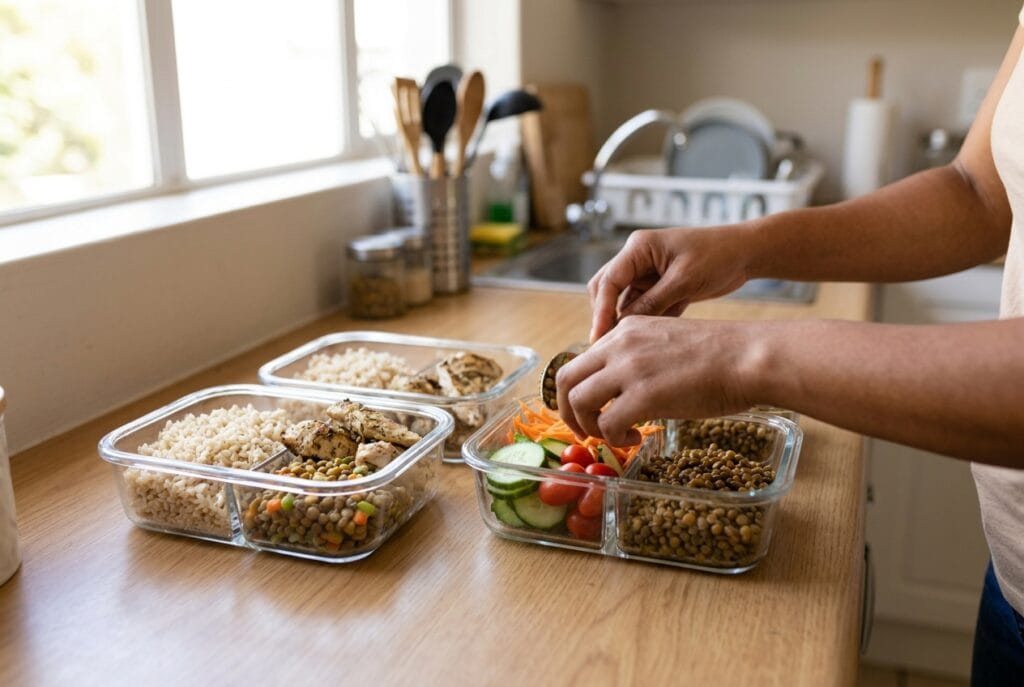
Traditional meal prep often involves cooking several complete meals in advance, but that approach does not suit everyone.
Another option is to prepare flexible components.
For example:
- cook a pot of rice
- boil several eggs
- prepare chicken or lentils
- cook two vegetables
- wash fruit
- portion yoghurt
- keep frozen vegetables ready
You can then combine those foods in different ways.
This type of simple meal planning provides structure without forcing you to eat exactly the same thing every day.
A Simple Grocery Checklist for Nutritious Meals
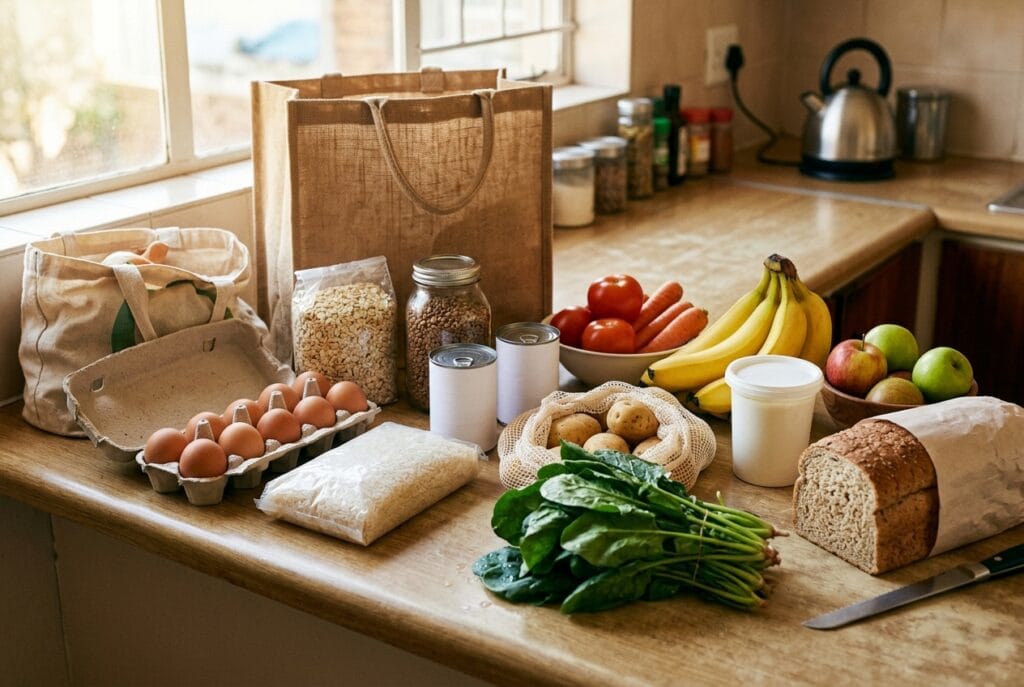
Grocery shopping becomes easier when you have a rough idea of the meals you can build from what you buy.
You do not need every food below. Choose options that fit your household, preferences and budget.
Starchy foods
- Oats
- Bread
- Rice
- Potatoes or sweet potatoes
- Maize meal
- Samp
- Pasta
Protein foods
- Eggs
- Beans
- Lentils
- Chicken
- Fish or tinned fish
- Lean meat if wanted
- Yoghurt
- Milk or maas
- Peanut butter
- Nuts or seeds where suitable
Vegetables and fruit
- Seasonal vegetables
- Frozen mixed vegetables
- Canned vegetables where useful
- Fresh fruit
- Frozen fruit if practical
Meal-building extras
- Herbs and spices
- Tomato products
- Onion and garlic
- Vegetable oil
- Avocado when available
- Simple sauces or condiments you enjoy
This approach to grocery shopping can support healthy eating in South Africa without making the weekly shop dependent on expensive health foods or speciality ingredients.
It also makes simple meal planning easier because you are choosing ingredients that can work across several meals.
Healthy Eating Habits That Make Busy Weeks Easier
Good nutrition is not only about individual food choices.
Your routines can make a big difference to how easy those choices feel.
Decide on a few reliable meals
You do not need seven different breakfasts and seven different lunches every week.
Having three or four dependable options can reduce decision-making.
For example, your regular breakfasts might be:
- oats and fruit
- eggs and toast
- yoghurt, fruit and oats
Your regular lunches might include:
- leftovers
- sandwiches with a protein food and vegetables
- rice bowls
- beans or lentils with a starch and vegetables
Repeating meals is not automatically a problem. You can create variety across the week by changing fruit, vegetables, protein foods and flavours.
Plan for your real schedule
One of the most useful healthy eating habits is planning around the week you actually have.
If you know Tuesdays are hectic, Tuesday is probably not the best evening to plan an elaborate recipe.
Keep one of your quickest meals for that night.
If you often arrive home late on Fridays, make sure a backup option is available.
Balanced meals for busy people become much more realistic when the plan fits the schedule instead of expecting the schedule to fit the food plan.
Cook extra when it makes sense
Cooking an additional portion at supper can provide one of the easiest healthy lunch ideas for the next day.
You do not have to spend Sunday preparing a full week of meals if that does not suit you.
Sometimes tomorrow’s lunch simply needs to begin with tonight’s supper.
Common Mistakes That Can Make Balanced Eating Harder
Trying to change everything at once
Changing breakfast, lunch, supper, snacks, shopping habits and cooking routines in one week can create more pressure than progress.
Start smaller.
You might begin with two reliable breakfasts and two easy lunches.
Once those feel manageable, add another habit.
Thinking every meal has to be perfect
One takeaway, rushed lunch or convenience meal does not define your overall diet.
Balanced eating is better viewed across time.
If lunch was less varied than usual, you do not need to punish yourself or “make up for it”. Simply continue with your normal meals.
Cutting out familiar carbohydrates unnecessarily
Rice, bread, potatoes, oats, maize meal and other starchy foods can all fit into a varied eating pattern.
Instead of asking whether a food is “good” or “bad”, consider the overall meal.
What could you add to make it more useful and satisfying?
Perhaps rice could be paired with beans, chicken and vegetables. Toast could be served with eggs and tomato. Pap could accompany fish, beans, chicken or vegetables.
That approach is usually more practical than unnecessary food rules.
Buying groceries for your ideal week
A fridge full of ambitious ingredients does not help if your actual week leaves very little time to cook.
Buy some foods for the days when you have time and some for the days when you do not.
Frozen vegetables, eggs, canned beans, tinned fish, yoghurt, fruit and familiar starches can all help make easy healthy meals more accessible.
Assuming healthy eating needs expensive foods
Healthy eating in South Africa does not need to revolve around imported ingredients, powders or speciality products.
Oats, eggs, beans, lentils, seasonal vegetables, fruit, maize meal, potatoes and other familiar foods can all contribute to nutritious meals.
Cost, access and household preferences matter, so choose foods that make sense for your circumstances.
Do Supplements or Meal Replacements Make a Meal Balanced?
Not automatically.
A supplement or meal replacement does not automatically create a balanced diet, and people do not necessarily need these products simply because they have a busy lifestyle.
A useful first step is usually to look at your overall food variety, meal routine and healthy eating habits.
For some people, an appropriate product may be a convenient option within a broader routine, depending on their goals, preferences and circumstances. Individual experiences vary, and a product should not be assumed to replace the variety provided by an appropriate overall diet.
If you are pregnant, breastfeeding, managing a health condition or taking medication, speak to an appropriately qualified healthcare professional before introducing supplements where individual advice is needed.
When to Speak to a Qualified Healthcare Professional
General information about balanced meals for busy people is not a substitute for personalised medical or dietetic care.
Consider speaking to a doctor or registered dietitian if you:
- have a diagnosed health condition that affects what or how you eat
- have significant food allergies or intolerances
- are pregnant or breastfeeding and need individual nutrition guidance
- have kidney, liver, digestive or metabolic health concerns
- experience persistent digestive symptoms
- have difficulty swallowing or eating
- experience unexplained or substantial changes in weight or appetite
- are concerned about restrictive eating, binge eating or your relationship with food
- require a medically prescribed eating plan
Do not change prescribed medication based on general nutrition information.
Balanced Meals for Busy People: Start With What Is Sustainable
Improving your everyday nutrition does not require changing your entire way of eating.
Start with meals you already enjoy and ask what small adjustment would make them easier to rely on.
Could you:
- Choose three breakfasts that require very little thought?
- Identify three healthy lunch ideas that work for your schedule?
- Keep two backup suppers at home?
- Add vegetables to one meal you already eat regularly?
- Include different fruit across the week?
- Rotate between several protein foods?
- Keep familiar starches in your meals rather than creating unnecessary restrictions?
- Cook an extra portion for tomorrow’s lunch?
- Keep frozen vegetables available for busy evenings?
- Use simple meal planning before your grocery shop?
- Choose convenience options when they genuinely make eating easier?
Small, repeatable habits are often more useful than complicated plans that only work during a perfect week.
The best balanced meals for busy people are not necessarily the meals that look impressive online. They are the ones that provide useful variety, suit your circumstances and are realistic enough to return to regularly.
How Everyday Wellness Can Help
Sometimes you already know the basics of balanced eating, but putting them into practice consistently is more difficult.
Work schedules, family responsibilities, shopping habits, food preferences and changing routines can all affect healthy eating habits.
Everyday Wellness provides non-medical wellness support focused on practical everyday choices and routines. If you would like support exploring what may fit your lifestyle, you can learn more about Wellness Support or start your wellness assessment.
The aim is not to create a perfect eating routine. It is to find practical steps that can fit into everyday life.
Wellness note: Everyday Wellness provides general wellness and product guidance and is not a medical, dietetic or clinical healthcare practice. Information in this article is general and is not intended to diagnose, treat, cure or prevent a medical condition or replace personalised advice from an appropriately qualified healthcare professional.
FAQs About Balanced Meals for Busy People
What is the easiest way to make a meal more balanced?
Start with the meal you already eat and look for an opportunity to add variety. Depending on what is already there, you might add vegetables or fruit, a protein food or a familiar starch. You do not necessarily need to replace the entire meal.
What are some easy healthy meals for busy evenings?
Simple options might include eggs with toast and vegetables, beans with pap and vegetables, lentils with rice, chicken with potatoes and frozen vegetables, or tinned fish with a starch and salad. Choose combinations that fit your budget and preferences.
Do I need to meal prep every week to eat balanced meals?
No. Traditional meal prep is only one form of simple meal planning. You could cook extra supper, prepare a few ingredients in advance or keep quick backup meals available instead.
What are good healthy lunch ideas for work?
Leftovers are often one of the simplest choices. Other healthy lunch ideas include egg sandwiches with vegetables, chicken and rice bowls, beans with a familiar starch, or lentils and vegetables. Choose options that are practical to store and transport safely.
Can pap and rice be included in nutritious meals?
Yes. Starchy foods such as maize meal and rice can form part of nutritious meals when combined within a varied overall eating pattern. Think about what else is included in the meal rather than judging the starch on its own.
Are frozen vegetables useful for healthy eating?
Yes. Frozen vegetables can be a practical option, particularly during busy weeks. They can reduce preparation time and make it easier to add vegetables to soups, curries, pasta, rice dishes and other easy healthy meals.
Do balanced meals for busy people need to be low in carbohydrates?
No. There is no general requirement for healthy adults to make every balanced meal low in carbohydrate. Foods such as oats, rice, potatoes, maize meal, whole grains, fruit and pulses can all provide carbohydrate. Individual medical requirements may differ.
Can balanced eating still include convenience foods?
Yes. Convenience foods can fit into balanced eating depending on the product and the overall dietary pattern. Frozen vegetables, canned beans, tinned fish and other quick options may make everyday nutrition more practical.
How can I develop better healthy eating habits?
Start with one or two changes that are realistic for your routine. You might keep a regular breakfast available, plan a few reliable lunches, cook extra supper or keep quick meal ingredients at home. Sustainable healthy eating habits usually need to fit your real schedule.
What if I need a meal plan for a health condition?
If a medical condition affects your dietary requirements, general wellness information is not a substitute for individual care. Speak to an appropriately qualified healthcare professional or registered dietitian for personalised advice.