
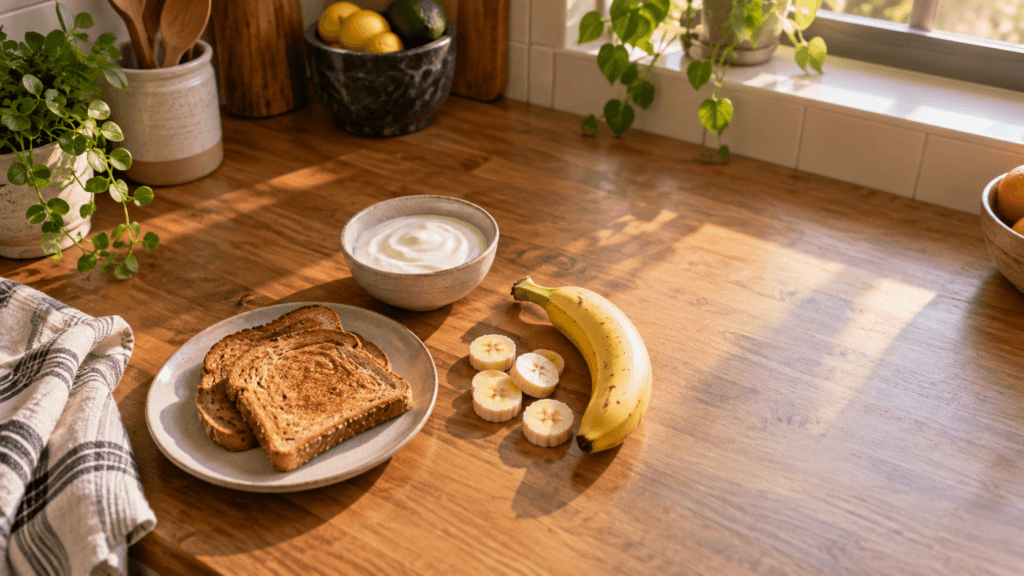
Pre-workout snacks do not need to be expensive, complicated or part of a strict fitness plan. Whether you exercise before work, squeeze in a lunchtime gym session or head out for an evening walk, choosing something suitable to eat beforehand can help you prepare for your activity. The key is finding an approach that fits your schedule, appetite and the type of exercise you enjoy.
Table of Contents
What are pre-workout snacks, and do you actually need one?
A pre-workout snack is simply something you eat before exercising. It may provide additional energy, help you manage hunger or bridge the gap between your last meal and your next workout.
However, not everyone needs to eat immediately before exercising.
If you have enjoyed a balanced meal and are heading out for a gentle 20-minute walk, you may feel perfectly comfortable without an additional snack.
A longer run, demanding gym session or workout after several hours without food may call for a different approach.

Your needs depend on several factors:
- How long you plan to exercise.
- How demanding the activity will be.
- When you last ate.
- Whether you feel hungry before exercise.
- How comfortably you digest food while moving.
- Your overall nutrition habits and individual circumstances.
The British Dietetic Association explains that carbohydrate needs increase with more demanding training, while people following a general fitness programme can often meet their needs through an ordinary balanced diet.
The important question is not whether everybody should have pre-workout snacks. It is whether eating something before your particular workout would be useful.
If you are still building an exercise habit, our guide to creating an active lifestyle with a busy schedule can help you find realistic ways to fit movement into your week.
When should you eat before a workout?
One of the most common questions about food before exercise is how long to leave between eating and starting your workout.
There is no single timing rule that suits everyone. A useful starting point is to think about how much food you want to eat and how soon you will be moving.
General sports nutrition guidance suggests allowing approximately three to four hours after a substantial pre-exercise meal, while a smaller snack may fit around one to two hours beforehand. These are flexible starting points rather than strict requirements.
Three to four hours before exercise
If you have enough time, a regular balanced meal may provide what you need without an additional snack.
For example, someone exercising after work might have lunch containing:
- Rice with chicken and vegetables.
- A sandwich with eggs and fruit.
- Pap with beans and vegetables.
- Pasta with a tomato-based sauce and a suitable protein food.
Your meal does not need to be specially designed for the gym.
It simply needs to fit into your usual eating pattern, provide adequate nourishment and leave you comfortable when exercise begins.
One to two hours before exercise
If your last meal was several hours ago, a smaller snack may be useful.
Possible choices include a banana, toast, yoghurt or a small bowl of cereal with milk.
This is often a convenient time for healthy workout snacks because you may have enough time to eat without feeling overly full.
The most suitable portion depends on your hunger, the food itself and your planned activity.
Less than an hour before exercise
If you are heading out almost immediately, keep your options simple.
A small banana, a slice of toast or another familiar carbohydrate-containing food may be easier to manage than a substantial meal.
Some people prefer not to eat this close to exercise, particularly before running or activities involving repeated jumping.
If you find that food causes discomfort, you may need to adjust the timing, type or amount.
There is no need to force yourself to eat a large snack immediately before every workout.
Easy pre-workout snacks using everyday South African foods
You do not need specialised sports foods to prepare for most everyday exercise sessions.
Many useful options are already available in an ordinary South African kitchen.
South Africa’s food-based dietary guidelines encourage a varied eating pattern that includes foods such as starches, fruit, vegetables, beans, milk, maas and yoghurt. These familiar foods can provide the foundation for everyday meals and snacks.
1. A banana
A banana is portable, requires very little preparation and contains carbohydrates.
It may be convenient before a morning gym session or when you are leaving work and heading straight to exercise.
If you are still hungry after eating a banana, consider whether you need a more substantial snack or an earlier meal.
2. Toast with jam or honey
Bread provides carbohydrates, while jam or honey can be an easy topping if you want something simple before exercise.
This may suit someone who has limited preparation time.
There is nothing wrong with choosing a familiar carbohydrate-containing food before an activity. Your overall eating pattern matters more than trying to make every individual snack nutritionally perfect.
3. Yoghurt with fruit
Plain yoghurt with sliced banana or another fruit can be a practical option when you have a little more time before training.
It combines carbohydrate-containing foods with some protein.
If dairy products tend to upset your stomach before exercise, choose an alternative that you know you tolerate.
4. A small bowl of oats
Oats can make a convenient pre-workout meal for someone exercising later in the morning.
Prepare them with milk or water and add fruit according to your preference.
Because oats contain fibre, a substantial bowl immediately before a demanding workout may not feel comfortable for everyone.
If you are sensitive to eating close to exercise, try having your oats earlier or choosing something lighter.
5. A simple fruit smoothie
A homemade smoothie can be useful when you prefer drinking something rather than eating a substantial snack.
For example, you could blend banana with milk or an appropriate milk alternative.
Keep the ingredients familiar and consider the amount you can comfortably manage.
You do not automatically need protein powder, specialised supplements or other additional products to make a suitable smoothie.
6. A small sandwich
If you exercise after work and lunch was several hours ago, a simple sandwich may be more satisfying than a piece of fruit.
Bread with egg or another familiar filling can be a convenient option when you have enough time to digest it.
You can prepare it at home and take it to work, reducing the need to find something suitable just before your workout.
7. A portion of leftover rice or pap
Pre-workout snacks do not have to resemble traditional snack foods.
A small portion of leftover rice or pap may be a practical carbohydrate-containing option, especially if you prefer savoury food.
The key is choosing a portion and combination that suits your appetite and digestion.
If you have limited time before exercise, a simpler option may feel more comfortable than a substantial meal with several rich or high-fibre additions.
For more everyday meal ideas, explore our guide to balanced meals for busy people .
Morning workout nutrition: what should you eat before early exercise?
Morning workout nutrition can be particularly challenging when you would rather sleep a little longer than get up to prepare breakfast.
Perhaps you leave home at 5:30 am for the gym. Maybe you enjoy an early run before the children wake up.
In either situation, eating a full breakfast well before exercise may not be realistic.
Start by considering the type of workout you have planned.
If you are going for a gentle morning walk
You may find that you feel comfortable having breakfast afterwards.
Other people prefer to eat something small first.
Both approaches may fit an ordinary routine, provided your overall food intake meets your needs and you feel well during activity.
If you are doing a more demanding workout
A small, familiar carbohydrate-containing snack may be useful if you wake up hungry or have not eaten since the previous evening.
For example:
- A banana before leaving home.
- A slice of toast while getting ready.
- A small smoothie if solid food feels unappealing.
You can then have your usual breakfast after your session.
For longer or more demanding training, nutrition requirements may be different. A registered dietitian with sports nutrition experience can help you develop an appropriate plan.
If eating early makes you uncomfortable
There is no need to force down a substantial breakfast immediately before exercise.
Experiment with the timing of familiar foods during ordinary training sessions.
You may discover that a smaller portion, a different food or more time between eating and exercising works better.
If you regularly experience dizziness, nausea or unusual weakness during exercise, stop and seek appropriate healthcare advice rather than assuming that a different snack will solve the problem.
What to eat before a workout when your day is already busy
Sometimes the biggest challenge is not deciding which food to eat.
It is remembering to make food available before you need it.
If you regularly exercise around work and family responsibilities, a little preparation can make your routine easier.
Before a lunchtime workout
Imagine that you have a gym session planned for 12:30 pm.
You ate breakfast at 7 am, and your next proper meal will be after exercise.
By late morning, you may be hungry.
Depending on your appetite and how much time you have, you could consider a banana, yoghurt or a small sandwich before leaving for the gym.
You can then have lunch afterwards.
You do not need to create an entirely separate eating schedule just because you have started exercising.
Before an evening workout
Perhaps you finish work at 5 pm and plan to exercise at 6 pm.
If lunch was at midday, there may be a considerable gap between your last meal and the start of your session.
Packing something to eat during the afternoon may be useful.
A sandwich, fruit with yoghurt or another suitable option can fit around your workday.
This may be more practical than arriving home hungry and trying to prepare a substantial meal immediately before exercising.
Before a weekend workout

Weekend routines often look different from weekdays.
You might go hiking, attend a group fitness class or take a longer walk with friends.
Consider what you will be doing, when you last ate and whether food will be available afterwards.
For longer activities, it may also be useful to think about access to water and whether you need to take food with you.
These simple exercise nutrition tips are about preparation, not following a rigid schedule.
Why carbohydrates before exercise can be useful
Carbohydrates are an important energy source during exercise.
The body stores some carbohydrate as glycogen, which can be used to help fuel physical activity.
The amount of carbohydrate needed varies according to the duration and demands of your training.
For someone doing an ordinary fitness session, regular meals may already provide enough.
For someone undertaking longer or more demanding exercise, planning carbohydrate intake around training may become more important.
This is why foods such as fruit, bread, oats, rice and pap can be useful choices.
It does not mean you need to avoid other food groups.
Protein, dietary fats, vegetables and other foods still have important roles in your overall eating pattern.
The timing of a particular meal simply influences which foods and portions may feel most comfortable immediately before exercise.
If you eat a substantial meal containing lots of fat or fibre shortly before running, for example, you might experience digestive discomfort.
That does not make those foods unhealthy. It means you may prefer to eat them at a different time.
Common pre-workout nutrition mistakes to avoid
The aim is not to get every decision right. It is to notice which habits are helping and which ones could be adjusted.
Here are a few common situations worth considering.
1. Eating a large meal immediately before exercise
A substantial meal may leave you feeling overly full, particularly during running or vigorous activity.
Try allowing more time between eating and exercising, or choose a smaller option when time is limited.
2. Assuming you must exercise without eating
Some people enjoy exercising before breakfast, while others feel better after having something to eat.
Neither approach needs to become a rule for everyone.
If you have a demanding session planned, consider whether your overall food intake and meal timing are suitable for the activity.
3. Relying on coffee instead of food
Coffee may be part of your usual morning routine, but it does not automatically replace a meal or provide the carbohydrate you may need for a longer workout.
If you regularly exercise after drinking only coffee, consider your hunger, activity level and overall eating pattern.
4. Buying supplements before considering ordinary food
A sports bar, shake or other convenient product may fit certain situations, but it is not automatically necessary.
The Australian Institute of Sport recognises that sports foods can be useful when ordinary food is impractical. Their usefulness depends on the demands of the activity and the person’s circumstances.
Start by considering whether familiar foods can meet your needs.
5. Ignoring your own experience
A snack that works well for a friend may not suit you.
Appetite, digestion, schedule and training demands differ.
Pay attention to how you feel and make gradual adjustments rather than copying someone else’s routine exactly.
A simple pre-workout snack checklist
Use this checklist before your next few exercise sessions.
My workout preparation checklist
- Consider how long and demanding my workout will be.
- Think about when I last ate and whether I am hungry.
- Choose a familiar snack if I need one.
- Allow enough time to eat comfortably.
- Take water with me when appropriate.
- Pack something in advance if I will exercise after work.
- Notice how the snack and timing feel during exercise.
You do not need to complete every item before a short walk.
The checklist is simply a reminder to make food and exercise work together in a way that suits your everyday life.
When to seek qualified nutrition or healthcare advice
General snack suggestions are not suitable for every situation.
Speak to an appropriately qualified healthcare professional or registered dietitian if you have a medical condition, are pregnant or breastfeeding, use medication that affects blood glucose, have ongoing digestive symptoms, or need advice about a specialised training diet.
People using insulin or certain diabetes medicines may need individual advice about food and exercise because physical activity can affect blood glucose levels. Do not change medication or use a general snack guide as a substitute for your diabetes care plan.
A qualified professional can also help if you are experiencing persistent fatigue, recurrent dizziness, difficulty eating enough for your activity level or concerns about your relationship with food.
Young athletes and people preparing for demanding endurance events may have additional nutrition requirements.
For more complex needs, individual assessment is more appropriate than following a generic pre-workout eating plan.
Frequently asked questions about pre-workout snacks
What is the best snack to eat before a workout?
There is no single best option.
A banana, toast or another familiar carbohydrate-containing food may be convenient before exercise.
The most suitable choice depends on when you last ate, the activity you have planned and how comfortably you digest the food.
Can I work out in the morning without breakfast?
Some people feel comfortable doing shorter, gentle activities before breakfast.
Others prefer to eat something first, particularly before longer or more demanding sessions.
Your overall nutrition, health and individual circumstances matter. If you have a medical condition or take medication that affects blood glucose, seek individual guidance before exercising without eating.
Is a banana enough before the gym?
A banana may be a convenient snack before certain workouts, but it is not necessarily enough for everyone.
Consider the duration of your session, your hunger and when you last ate.
A more substantial snack or meal may be appropriate in some circumstances.
Should I eat protein before exercise?
Protein is important in an overall balanced diet, particularly for people who exercise regularly.
However, you do not need to make every pre-workout snack protein-focused.
Carbohydrate-containing foods can be useful before exercise, while your overall protein needs can often be met through regular meals.
Do I need a pre-workout supplement?
Not necessarily.
For many people, everyday foods and an appropriate eating routine are a practical starting point.
Some products may offer convenience in particular situations, but supplements are not automatically required for ordinary exercise.
Always consider your individual circumstances and seek qualified advice where appropriate.
How Everyday Wellness can help
Finding a suitable pre-workout eating routine can feel more manageable when you consider your exercise habits alongside the rest of your day.
Everyday Wellness offers practical lifestyle guidance for people who want to build more consistent everyday nutrition and activity habits.
Amanda Pillay can talk through your schedule, general wellness goals and the challenges you experience when fitting food and exercise around work or family commitments.
If you would like to explore how general nutrition habits and personal wellness support may fit into your training routine, visit our Performance Wellness Support page.
You can also start your free wellness assessment to share more about your routine and the kind of support you are looking for.
There is no requirement to purchase products to begin improving your everyday habits.
Wellness note: Everyday Wellness provides general wellness guidance and product information, not medical, dietetic or clinical healthcare services. Supplements and meal replacements are not automatically necessary for exercise. Always consult an appropriately qualified healthcare professional when you need individual medical or specialist nutrition advice.
The most practical pre-workout snacks are often the ones you already enjoy, can prepare easily and feel comfortable eating before activity. Start with familiar foods, consider your schedule and adjust your routine according to your individual needs.